Amazon LEO speeds in Kenya will be one of the biggest factors customers use to compare the service with Starlink, fibre, 4G, 5G, and fixed wireless internet. Amazon has promoted its LEO network as high-speed and low-latency, but Kenyan users should wait for local test results before treating global claims as guaranteed performance.
What speeds can Amazon LEO deliver?
Amazon has discussed a range of terminals for different users, from compact customer devices to higher-throughput enterprise hardware. Larger enterprise terminals may support much higher speeds than smaller residential-style terminals. That means the speed you get in Kenya will likely depend on the exact terminal, subscription plan, network capacity, and installation quality.
Expected use cases
For homes, Amazon LEO could support browsing, streaming, video calls, online classes, cloud apps, and smart devices. For businesses, it could support POS systems, emails, CCTV, remote access, VoIP, backup internet, and branch connectivity. For schools and institutions, it could help where fibre is unavailable or too expensive to extend.
What affects real-world speed?
- Network capacity in your area.
- The terminal model and service plan.
- Clear sky visibility and correct alignment.
- Weather, especially heavy rain.
- Router quality and Wi-Fi coverage inside the building.
- Number of connected users and devices.
- Peak-hour congestion.
Download vs upload speeds
Most satellite internet users focus on download speed, but upload speed matters for Zoom calls, CCTV cloud backup, file uploads, live streaming, and remote work. Customers should ask for both download and upload expectations before buying a kit. They should also ask whether speeds are best-effort or backed by a business service level agreement.
How Amazon LEO may compare with Starlink
Starlink has existing Kenyan performance experience, while Amazon LEO still needs local launch data. Amazon could compete strongly if it offers enough capacity, good routing, and reliable terminals. For a direct comparison, read Amazon Leo vs Starlink in Kenya.
How to get the best speeds
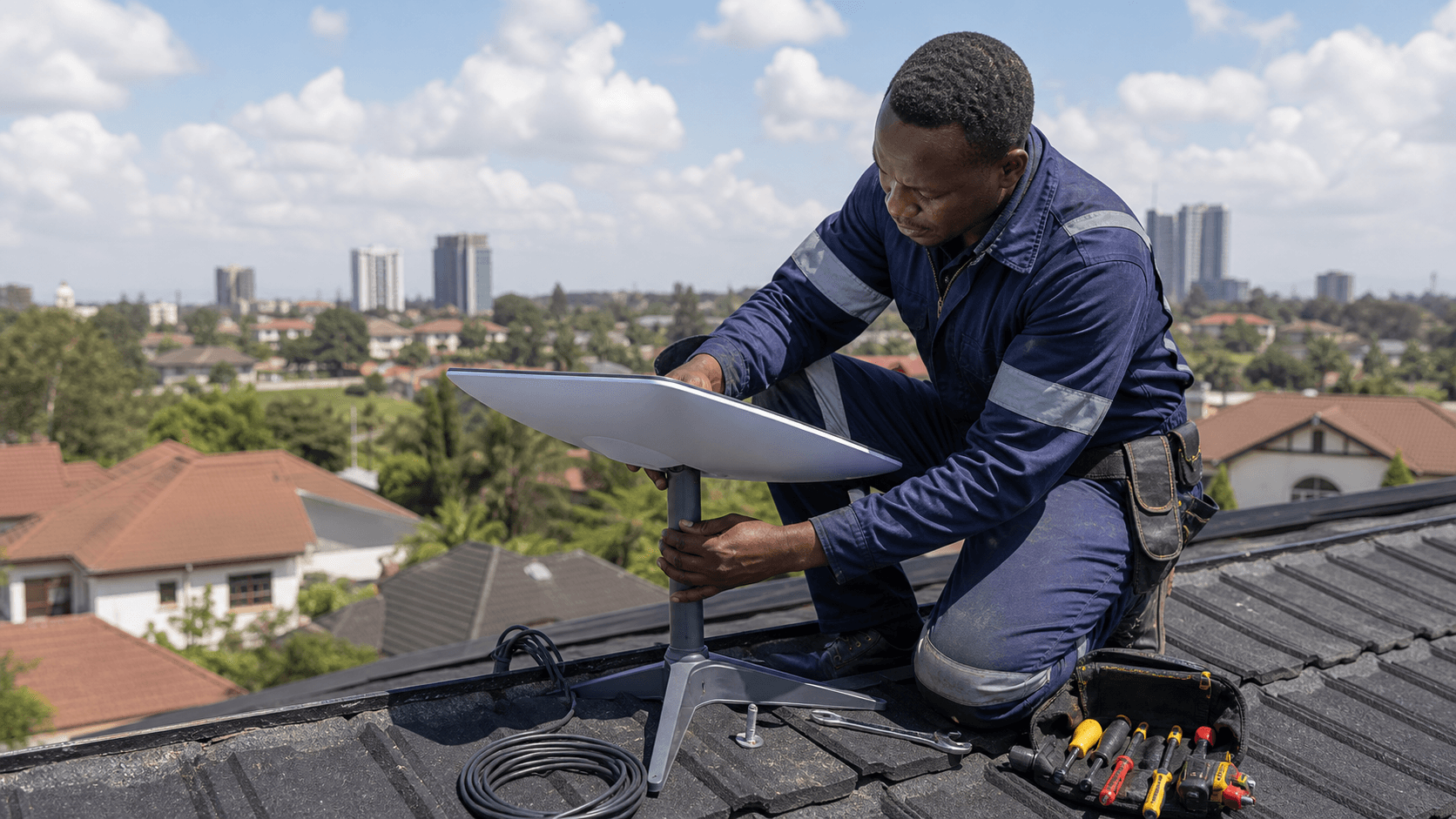
Use a professional installation where possible, mount the terminal with a clear sky view, avoid long low-quality cable runs, use a proper router for large buildings, and add backup power. Many speed complaints come from Wi-Fi or installation problems rather than the satellite link itself.
Customers planning for future service should also read Amazon Leo coverage map in Kenya.
Bottom line
Amazon LEO speeds in Kenya could be strong, especially for areas without fibre, but the final answer depends on local coverage, plan design, terminal type, and capacity. Treat any fixed speed promise with caution until official Kenyan plans and real-world tests are available.
Expanded Kenya buyer guide for Amazon LEO speeds in Kenya
Amazon LEO speeds in Kenya needs a practical Kenyan buying framework because satellite internet decisions affect daily work, school access, payments, security, communication, and business continuity. This topic matters because advertised maximum speeds are not the same as real Kenyan performance at a specific site with specific users and applications. A customer should not buy only because a provider has a famous name or a high advertised speed. The safer method is to check licensing, coverage, activation, installation, support, pricing, latency, router design, power backup, and the number of people who will share the connection.



Planning around licensing and legal availability
When evaluating Amazon LEO speeds in Kenya, the section on licensing and legal availability should be handled as a real procurement question. Kenyan customers often operate in mixed conditions: one site may have fibre, another may depend on 4G, and another may have no stable terrestrial option. The best satellite internet decision starts by writing down the location, user count, most important applications, acceptable downtime, monthly budget, and the support expectation before any hardware is purchased.
For licensing and legal availability, the buyer should ask for written answers instead of relying on verbal promises. A reliable offer should explain whether service is officially available, whether the terminal can be activated in Kenya, what plan type is being sold, what speeds are realistic, what happens during congestion, who installs the equipment, who handles warranty issues, and what the customer should do if the link fails during working hours.
This matters because LEO satellite internet is affected by both space infrastructure and very local conditions. A clear sky view, safe mounting, stable power, a good router, and well-designed Wi-Fi can make a strong service perform well. Poor mounting, blocked sky, weak indoor Wi-Fi, overloaded users, and no backup power can make even a capable satellite service feel unreliable. Customers should plan the whole connection, not only the dish.
For homes, licensing and legal availability usually affects streaming, video calls, online learning, and everyday browsing. For businesses, it affects payments, bookings, staff communication, cloud apps, CCTV, remote work, and customer service. For schools, lodges, farms, churches, clinics, NGOs, and county sites, it affects shared access and operational continuity. That is why the cheapest quote is not always the best quote, and the fastest headline speed is not always the best service.
The practical recommendation is to compare Amazon LEO speeds in Kenya against the actual job the connection must do. If the site needs service today, an already available provider has an advantage. If the site can wait for more competition, Amazon Leo and Kuiper developments are worth monitoring. If the site needs enterprise-grade accountability, managed service options such as OneWeb-style deployments may be relevant. The correct answer depends on the site, not only the brand.
Planning around coverage and local capacity
When evaluating Amazon LEO speeds in Kenya, the section on coverage and local capacity should be handled as a real procurement question. Kenyan customers often operate in mixed conditions: one site may have fibre, another may depend on 4G, and another may have no stable terrestrial option. The best satellite internet decision starts by writing down the location, user count, most important applications, acceptable downtime, monthly budget, and the support expectation before any hardware is purchased.
For coverage and local capacity, the buyer should ask for written answers instead of relying on verbal promises. A reliable offer should explain whether service is officially available, whether the terminal can be activated in Kenya, what plan type is being sold, what speeds are realistic, what happens during congestion, who installs the equipment, who handles warranty issues, and what the customer should do if the link fails during working hours.
This matters because LEO satellite internet is affected by both space infrastructure and very local conditions. A clear sky view, safe mounting, stable power, a good router, and well-designed Wi-Fi can make a strong service perform well. Poor mounting, blocked sky, weak indoor Wi-Fi, overloaded users, and no backup power can make even a capable satellite service feel unreliable. Customers should plan the whole connection, not only the dish.
For homes, coverage and local capacity usually affects streaming, video calls, online learning, and everyday browsing. For businesses, it affects payments, bookings, staff communication, cloud apps, CCTV, remote work, and customer service. For schools, lodges, farms, churches, clinics, NGOs, and county sites, it affects shared access and operational continuity. That is why the cheapest quote is not always the best quote, and the fastest headline speed is not always the best service.
The practical recommendation is to compare Amazon LEO speeds in Kenya against the actual job the connection must do. If the site needs service today, an already available provider has an advantage. If the site can wait for more competition, Amazon Leo and Kuiper developments are worth monitoring. If the site needs enterprise-grade accountability, managed service options such as OneWeb-style deployments may be relevant. The correct answer depends on the site, not only the brand.
Planning around installation quality
When evaluating Amazon LEO speeds in Kenya, the section on installation quality should be handled as a real procurement question. Kenyan customers often operate in mixed conditions: one site may have fibre, another may depend on 4G, and another may have no stable terrestrial option. The best satellite internet decision starts by writing down the location, user count, most important applications, acceptable downtime, monthly budget, and the support expectation before any hardware is purchased.
For installation quality, the buyer should ask for written answers instead of relying on verbal promises. A reliable offer should explain whether service is officially available, whether the terminal can be activated in Kenya, what plan type is being sold, what speeds are realistic, what happens during congestion, who installs the equipment, who handles warranty issues, and what the customer should do if the link fails during working hours.
This matters because LEO satellite internet is affected by both space infrastructure and very local conditions. A clear sky view, safe mounting, stable power, a good router, and well-designed Wi-Fi can make a strong service perform well. Poor mounting, blocked sky, weak indoor Wi-Fi, overloaded users, and no backup power can make even a capable satellite service feel unreliable. Customers should plan the whole connection, not only the dish.
For homes, installation quality usually affects streaming, video calls, online learning, and everyday browsing. For businesses, it affects payments, bookings, staff communication, cloud apps, CCTV, remote work, and customer service. For schools, lodges, farms, churches, clinics, NGOs, and county sites, it affects shared access and operational continuity. That is why the cheapest quote is not always the best quote, and the fastest headline speed is not always the best service.
The practical recommendation is to compare Amazon LEO speeds in Kenya against the actual job the connection must do. If the site needs service today, an already available provider has an advantage. If the site can wait for more competition, Amazon Leo and Kuiper developments are worth monitoring. If the site needs enterprise-grade accountability, managed service options such as OneWeb-style deployments may be relevant. The correct answer depends on the site, not only the brand.
Planning around download speed and upload speed
When evaluating Amazon LEO speeds in Kenya, the section on download speed and upload speed should be handled as a real procurement question. Kenyan customers often operate in mixed conditions: one site may have fibre, another may depend on 4G, and another may have no stable terrestrial option. The best satellite internet decision starts by writing down the location, user count, most important applications, acceptable downtime, monthly budget, and the support expectation before any hardware is purchased.
For download speed and upload speed, the buyer should ask for written answers instead of relying on verbal promises. A reliable offer should explain whether service is officially available, whether the terminal can be activated in Kenya, what plan type is being sold, what speeds are realistic, what happens during congestion, who installs the equipment, who handles warranty issues, and what the customer should do if the link fails during working hours.
This matters because LEO satellite internet is affected by both space infrastructure and very local conditions. A clear sky view, safe mounting, stable power, a good router, and well-designed Wi-Fi can make a strong service perform well. Poor mounting, blocked sky, weak indoor Wi-Fi, overloaded users, and no backup power can make even a capable satellite service feel unreliable. Customers should plan the whole connection, not only the dish.
For homes, download speed and upload speed usually affects streaming, video calls, online learning, and everyday browsing. For businesses, it affects payments, bookings, staff communication, cloud apps, CCTV, remote work, and customer service. For schools, lodges, farms, churches, clinics, NGOs, and county sites, it affects shared access and operational continuity. That is why the cheapest quote is not always the best quote, and the fastest headline speed is not always the best service.
The practical recommendation is to compare Amazon LEO speeds in Kenya against the actual job the connection must do. If the site needs service today, an already available provider has an advantage. If the site can wait for more competition, Amazon Leo and Kuiper developments are worth monitoring. If the site needs enterprise-grade accountability, managed service options such as OneWeb-style deployments may be relevant. The correct answer depends on the site, not only the brand.
Planning around latency and real-time applications
When evaluating Amazon LEO speeds in Kenya, the section on latency and real-time applications should be handled as a real procurement question. Kenyan customers often operate in mixed conditions: one site may have fibre, another may depend on 4G, and another may have no stable terrestrial option. The best satellite internet decision starts by writing down the location, user count, most important applications, acceptable downtime, monthly budget, and the support expectation before any hardware is purchased.
For latency and real-time applications, the buyer should ask for written answers instead of relying on verbal promises. A reliable offer should explain whether service is officially available, whether the terminal can be activated in Kenya, what plan type is being sold, what speeds are realistic, what happens during congestion, who installs the equipment, who handles warranty issues, and what the customer should do if the link fails during working hours.
This matters because LEO satellite internet is affected by both space infrastructure and very local conditions. A clear sky view, safe mounting, stable power, a good router, and well-designed Wi-Fi can make a strong service perform well. Poor mounting, blocked sky, weak indoor Wi-Fi, overloaded users, and no backup power can make even a capable satellite service feel unreliable. Customers should plan the whole connection, not only the dish.
For homes, latency and real-time applications usually affects streaming, video calls, online learning, and everyday browsing. For businesses, it affects payments, bookings, staff communication, cloud apps, CCTV, remote work, and customer service. For schools, lodges, farms, churches, clinics, NGOs, and county sites, it affects shared access and operational continuity. That is why the cheapest quote is not always the best quote, and the fastest headline speed is not always the best service.
The practical recommendation is to compare Amazon LEO speeds in Kenya against the actual job the connection must do. If the site needs service today, an already available provider has an advantage. If the site can wait for more competition, Amazon Leo and Kuiper developments are worth monitoring. If the site needs enterprise-grade accountability, managed service options such as OneWeb-style deployments may be relevant. The correct answer depends on the site, not only the brand.
Planning around pricing and total ownership cost
When evaluating Amazon LEO speeds in Kenya, the section on pricing and total ownership cost should be handled as a real procurement question. Kenyan customers often operate in mixed conditions: one site may have fibre, another may depend on 4G, and another may have no stable terrestrial option. The best satellite internet decision starts by writing down the location, user count, most important applications, acceptable downtime, monthly budget, and the support expectation before any hardware is purchased.
For pricing and total ownership cost, the buyer should ask for written answers instead of relying on verbal promises. A reliable offer should explain whether service is officially available, whether the terminal can be activated in Kenya, what plan type is being sold, what speeds are realistic, what happens during congestion, who installs the equipment, who handles warranty issues, and what the customer should do if the link fails during working hours.
This matters because LEO satellite internet is affected by both space infrastructure and very local conditions. A clear sky view, safe mounting, stable power, a good router, and well-designed Wi-Fi can make a strong service perform well. Poor mounting, blocked sky, weak indoor Wi-Fi, overloaded users, and no backup power can make even a capable satellite service feel unreliable. Customers should plan the whole connection, not only the dish.
For homes, pricing and total ownership cost usually affects streaming, video calls, online learning, and everyday browsing. For businesses, it affects payments, bookings, staff communication, cloud apps, CCTV, remote work, and customer service. For schools, lodges, farms, churches, clinics, NGOs, and county sites, it affects shared access and operational continuity. That is why the cheapest quote is not always the best quote, and the fastest headline speed is not always the best service.
The practical recommendation is to compare Amazon LEO speeds in Kenya against the actual job the connection must do. If the site needs service today, an already available provider has an advantage. If the site can wait for more competition, Amazon Leo and Kuiper developments are worth monitoring. If the site needs enterprise-grade accountability, managed service options such as OneWeb-style deployments may be relevant. The correct answer depends on the site, not only the brand.
Planning around home use cases
When evaluating Amazon LEO speeds in Kenya, the section on home use cases should be handled as a real procurement question. Kenyan customers often operate in mixed conditions: one site may have fibre, another may depend on 4G, and another may have no stable terrestrial option. The best satellite internet decision starts by writing down the location, user count, most important applications, acceptable downtime, monthly budget, and the support expectation before any hardware is purchased.
For home use cases, the buyer should ask for written answers instead of relying on verbal promises. A reliable offer should explain whether service is officially available, whether the terminal can be activated in Kenya, what plan type is being sold, what speeds are realistic, what happens during congestion, who installs the equipment, who handles warranty issues, and what the customer should do if the link fails during working hours.
This matters because LEO satellite internet is affected by both space infrastructure and very local conditions. A clear sky view, safe mounting, stable power, a good router, and well-designed Wi-Fi can make a strong service perform well. Poor mounting, blocked sky, weak indoor Wi-Fi, overloaded users, and no backup power can make even a capable satellite service feel unreliable. Customers should plan the whole connection, not only the dish.
For homes, home use cases usually affects streaming, video calls, online learning, and everyday browsing. For businesses, it affects payments, bookings, staff communication, cloud apps, CCTV, remote work, and customer service. For schools, lodges, farms, churches, clinics, NGOs, and county sites, it affects shared access and operational continuity. That is why the cheapest quote is not always the best quote, and the fastest headline speed is not always the best service.
The practical recommendation is to compare Amazon LEO speeds in Kenya against the actual job the connection must do. If the site needs service today, an already available provider has an advantage. If the site can wait for more competition, Amazon Leo and Kuiper developments are worth monitoring. If the site needs enterprise-grade accountability, managed service options such as OneWeb-style deployments may be relevant. The correct answer depends on the site, not only the brand.
Planning around business and school use cases
When evaluating Amazon LEO speeds in Kenya, the section on business and school use cases should be handled as a real procurement question. Kenyan customers often operate in mixed conditions: one site may have fibre, another may depend on 4G, and another may have no stable terrestrial option. The best satellite internet decision starts by writing down the location, user count, most important applications, acceptable downtime, monthly budget, and the support expectation before any hardware is purchased.
For business and school use cases, the buyer should ask for written answers instead of relying on verbal promises. A reliable offer should explain whether service is officially available, whether the terminal can be activated in Kenya, what plan type is being sold, what speeds are realistic, what happens during congestion, who installs the equipment, who handles warranty issues, and what the customer should do if the link fails during working hours.
This matters because LEO satellite internet is affected by both space infrastructure and very local conditions. A clear sky view, safe mounting, stable power, a good router, and well-designed Wi-Fi can make a strong service perform well. Poor mounting, blocked sky, weak indoor Wi-Fi, overloaded users, and no backup power can make even a capable satellite service feel unreliable. Customers should plan the whole connection, not only the dish.
For homes, business and school use cases usually affects streaming, video calls, online learning, and everyday browsing. For businesses, it affects payments, bookings, staff communication, cloud apps, CCTV, remote work, and customer service. For schools, lodges, farms, churches, clinics, NGOs, and county sites, it affects shared access and operational continuity. That is why the cheapest quote is not always the best quote, and the fastest headline speed is not always the best service.
The practical recommendation is to compare Amazon LEO speeds in Kenya against the actual job the connection must do. If the site needs service today, an already available provider has an advantage. If the site can wait for more competition, Amazon Leo and Kuiper developments are worth monitoring. If the site needs enterprise-grade accountability, managed service options such as OneWeb-style deployments may be relevant. The correct answer depends on the site, not only the brand.
Planning around comparison with Starlink OneWeb and Kuiper
When evaluating Amazon LEO speeds in Kenya, the section on comparison with Starlink OneWeb and Kuiper should be handled as a real procurement question. Kenyan customers often operate in mixed conditions: one site may have fibre, another may depend on 4G, and another may have no stable terrestrial option. The best satellite internet decision starts by writing down the location, user count, most important applications, acceptable downtime, monthly budget, and the support expectation before any hardware is purchased.
For comparison with Starlink OneWeb and Kuiper, the buyer should ask for written answers instead of relying on verbal promises. A reliable offer should explain whether service is officially available, whether the terminal can be activated in Kenya, what plan type is being sold, what speeds are realistic, what happens during congestion, who installs the equipment, who handles warranty issues, and what the customer should do if the link fails during working hours.
This matters because LEO satellite internet is affected by both space infrastructure and very local conditions. A clear sky view, safe mounting, stable power, a good router, and well-designed Wi-Fi can make a strong service perform well. Poor mounting, blocked sky, weak indoor Wi-Fi, overloaded users, and no backup power can make even a capable satellite service feel unreliable. Customers should plan the whole connection, not only the dish.
For homes, comparison with Starlink OneWeb and Kuiper usually affects streaming, video calls, online learning, and everyday browsing. For businesses, it affects payments, bookings, staff communication, cloud apps, CCTV, remote work, and customer service. For schools, lodges, farms, churches, clinics, NGOs, and county sites, it affects shared access and operational continuity. That is why the cheapest quote is not always the best quote, and the fastest headline speed is not always the best service.
The practical recommendation is to compare Amazon LEO speeds in Kenya against the actual job the connection must do. If the site needs service today, an already available provider has an advantage. If the site can wait for more competition, Amazon Leo and Kuiper developments are worth monitoring. If the site needs enterprise-grade accountability, managed service options such as OneWeb-style deployments may be relevant. The correct answer depends on the site, not only the brand.
Planning around support warranty and activation
When evaluating Amazon LEO speeds in Kenya, the section on support warranty and activation should be handled as a real procurement question. Kenyan customers often operate in mixed conditions: one site may have fibre, another may depend on 4G, and another may have no stable terrestrial option. The best satellite internet decision starts by writing down the location, user count, most important applications, acceptable downtime, monthly budget, and the support expectation before any hardware is purchased.
For support warranty and activation, the buyer should ask for written answers instead of relying on verbal promises. A reliable offer should explain whether service is officially available, whether the terminal can be activated in Kenya, what plan type is being sold, what speeds are realistic, what happens during congestion, who installs the equipment, who handles warranty issues, and what the customer should do if the link fails during working hours.
This matters because LEO satellite internet is affected by both space infrastructure and very local conditions. A clear sky view, safe mounting, stable power, a good router, and well-designed Wi-Fi can make a strong service perform well. Poor mounting, blocked sky, weak indoor Wi-Fi, overloaded users, and no backup power can make even a capable satellite service feel unreliable. Customers should plan the whole connection, not only the dish.
For homes, support warranty and activation usually affects streaming, video calls, online learning, and everyday browsing. For businesses, it affects payments, bookings, staff communication, cloud apps, CCTV, remote work, and customer service. For schools, lodges, farms, churches, clinics, NGOs, and county sites, it affects shared access and operational continuity. That is why the cheapest quote is not always the best quote, and the fastest headline speed is not always the best service.
The practical recommendation is to compare Amazon LEO speeds in Kenya against the actual job the connection must do. If the site needs service today, an already available provider has an advantage. If the site can wait for more competition, Amazon Leo and Kuiper developments are worth monitoring. If the site needs enterprise-grade accountability, managed service options such as OneWeb-style deployments may be relevant. The correct answer depends on the site, not only the brand.
Planning around network design and backup power
When evaluating Amazon LEO speeds in Kenya, the section on network design and backup power should be handled as a real procurement question. Kenyan customers often operate in mixed conditions: one site may have fibre, another may depend on 4G, and another may have no stable terrestrial option. The best satellite internet decision starts by writing down the location, user count, most important applications, acceptable downtime, monthly budget, and the support expectation before any hardware is purchased.
For network design and backup power, the buyer should ask for written answers instead of relying on verbal promises. A reliable offer should explain whether service is officially available, whether the terminal can be activated in Kenya, what plan type is being sold, what speeds are realistic, what happens during congestion, who installs the equipment, who handles warranty issues, and what the customer should do if the link fails during working hours.
This matters because LEO satellite internet is affected by both space infrastructure and very local conditions. A clear sky view, safe mounting, stable power, a good router, and well-designed Wi-Fi can make a strong service perform well. Poor mounting, blocked sky, weak indoor Wi-Fi, overloaded users, and no backup power can make even a capable satellite service feel unreliable. Customers should plan the whole connection, not only the dish.
For homes, network design and backup power usually affects streaming, video calls, online learning, and everyday browsing. For businesses, it affects payments, bookings, staff communication, cloud apps, CCTV, remote work, and customer service. For schools, lodges, farms, churches, clinics, NGOs, and county sites, it affects shared access and operational continuity. That is why the cheapest quote is not always the best quote, and the fastest headline speed is not always the best service.
The practical recommendation is to compare Amazon LEO speeds in Kenya against the actual job the connection must do. If the site needs service today, an already available provider has an advantage. If the site can wait for more competition, Amazon Leo and Kuiper developments are worth monitoring. If the site needs enterprise-grade accountability, managed service options such as OneWeb-style deployments may be relevant. The correct answer depends on the site, not only the brand.
Planning around final buying decision
When evaluating Amazon LEO speeds in Kenya, the section on final buying decision should be handled as a real procurement question. Kenyan customers often operate in mixed conditions: one site may have fibre, another may depend on 4G, and another may have no stable terrestrial option. The best satellite internet decision starts by writing down the location, user count, most important applications, acceptable downtime, monthly budget, and the support expectation before any hardware is purchased.
For final buying decision, the buyer should ask for written answers instead of relying on verbal promises. A reliable offer should explain whether service is officially available, whether the terminal can be activated in Kenya, what plan type is being sold, what speeds are realistic, what happens during congestion, who installs the equipment, who handles warranty issues, and what the customer should do if the link fails during working hours.
This matters because LEO satellite internet is affected by both space infrastructure and very local conditions. A clear sky view, safe mounting, stable power, a good router, and well-designed Wi-Fi can make a strong service perform well. Poor mounting, blocked sky, weak indoor Wi-Fi, overloaded users, and no backup power can make even a capable satellite service feel unreliable. Customers should plan the whole connection, not only the dish.
For homes, final buying decision usually affects streaming, video calls, online learning, and everyday browsing. For businesses, it affects payments, bookings, staff communication, cloud apps, CCTV, remote work, and customer service. For schools, lodges, farms, churches, clinics, NGOs, and county sites, it affects shared access and operational continuity. That is why the cheapest quote is not always the best quote, and the fastest headline speed is not always the best service.
The practical recommendation is to compare Amazon LEO speeds in Kenya against the actual job the connection must do. If the site needs service today, an already available provider has an advantage. If the site can wait for more competition, Amazon Leo and Kuiper developments are worth monitoring. If the site needs enterprise-grade accountability, managed service options such as OneWeb-style deployments may be relevant. The correct answer depends on the site, not only the brand.
Internal links for further reading
Use these related internal guides to continue comparing Amazon Leo, Starlink, Kuiper, OneWeb, coverage, speeds, latency, pricing, installation, and licensing in Kenya:
- Amazon LEO Internet licensing in Kenya
- Amazon Leo vs Starlink in Kenya
- Amazon Leo coverage map in Kenya
- Amazon Leo Nano in Kenya
- Amazon Leo vs Starlink latency in Kenya
- OneWeb vs Starlink vs Kuiper in Kenya
- Amazon Kuiper Kenya Limited
- Amazon LEO Internet Kenya
- Amazon LEO Internet pricing
Previously provided supporting links
The following links are included as requested for additional context, service information, installation guidance, and pricing reference:
- Amazon Internet Kenya
- Amazon LEO Internet Kenya
- Amazon LEO Internet installation in Nairobi
- Amazon LEO Internet pricing
Final buyer checklist
- Confirm official availability for the exact location in Kenya.
- Confirm the seller can activate, install, and support the service locally.
- Check the exact terminal model, plan type, warranty, and activation rules.
- Ask for download speed, upload speed, latency expectations, and fair usage terms.
- Confirm the full cost: kit, delivery, mount, cabling, installation, router, tax, and monthly subscription.
- Inspect the roof, pole, or mounting point for obstructions and safe access.
- Plan backup power for the terminal, router, and Wi-Fi equipment.
- Use a business-grade router or access points for offices, schools, lodges, and large homes.
- Keep written records of the quote, serial numbers, account details, support contacts, and warranty terms.
- For business sites, test real applications such as POS, cloud software, CCTV, video calls, and VPN before depending fully on the link.
